A mother served by our diaper bank told HAMO if she had not received diapers through our program, she would have had to beg for them. Another mother confided she went to jail for stealing diapers she couldn’t afford to buy.
Nearly one in two families struggle with their diaper supply. “A lot of people don’t understand how bad I feel when I don’t have enough money to buy a bag of diapers,” a mother told us. “There is a lot of shame.”
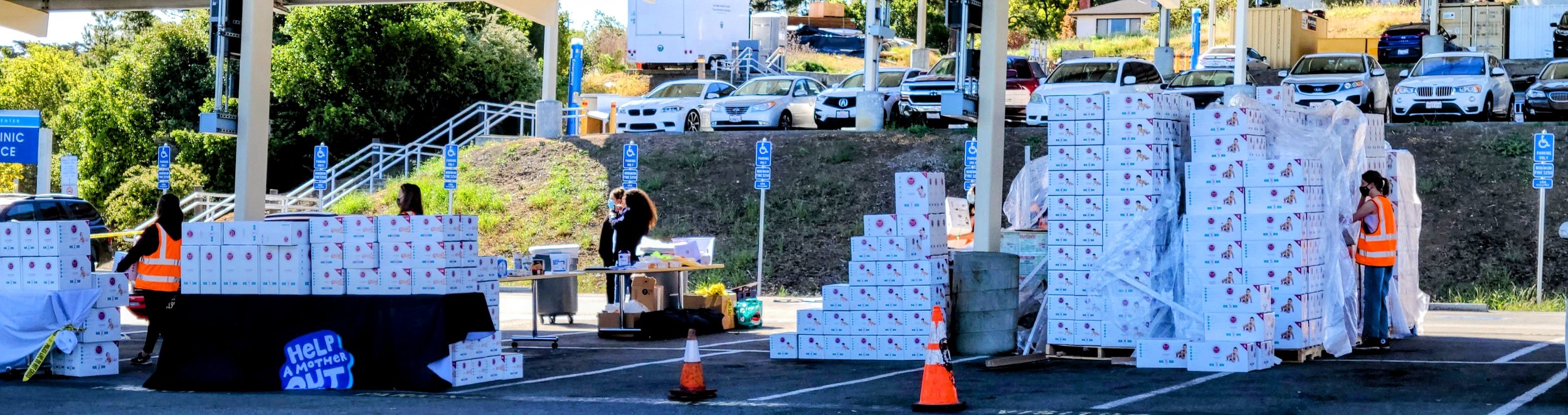
We help these mothers at scale through diaper banks. California’s diaper bank network has served 1.7 million families across 39 counties since 2019, and reaches about 7,500 Bay Area babies each month through Help a Mother Out.
Public assistance programs like SNAP or Women, Infants, and Children (WIC), don’t cover diapers, which are critical to parents trying to juggle childcare and work. Almost every daycare requires parents to bring a clean supply of disposable diapers for their child. Without those diapers, parents can’t access safe childcare while they are at work or school.
Babies who receive diapers from diaper banks have been shown to experience half as many cases of severe diaper rash, which means parents spend less money on creams and doctor visits. Diaper insecurity contributes to parental stress and depression, and parental depression puts babies and young children’s brain development at risk.
State funding allows diaper banks to offer peace of mind and economic relief to families. Access to diapers through diaper banks is foundational to babies’ health and to the stability of families across California. Research shows diaper banks produce $2 in health care savings for every $1 spent distributing diapers.
In 2019, California pioneered state investment in diaper banks. These organizations serve families for whom cloth diapers, which require access to private laundry facilities, are not a viable option.
“I desperately need diapers and wipes,” said a mother in San Francisco who told us she had torn up bedsheets as makeshift cloth diapers. “It is embarrassing that my babies are in this situation, but I can’t take it any longer.”
Governor Newsom signed a measure into law in 2021 that made diapers exempt from state sales tax, a tremendous step that helps make diapers more affordable. But without action by the Legislature, state funding for diaper banks will end, tearing apart hard-built infrastructure that supports so many families.
In California, approximately 13 to 18 percent of young children live below the California Poverty Measure. That rate of poverty in our youngest Californians climbed as pandemic-era relief programs ended.
Now, with the new federal law (H.R. 1) looming, it’s about to get even harder for low-income families. The California Legislature’s nonpartisan policy advisors project the number of Californians without health insurance to double by 2030, and the California Budget & Policy Center reports more than 3 million households are at risk of losing some or all their food assistance due to cuts to CalFresh, the California program funded by the federal Supplemental Nutrition Assistance Program (SNAP).
These federal cuts are colliding with rising cuts across the board. The price of retail diapers, which already runs up to $135 a month for one child, has climbed 45 percent since before the COVID-19 pandemic. This summer, we expect those costs to soar even higher.
Assemblymember Liz Ortega (D-20) and a bipartisan group of 39 of her colleagues secured $16.5 million in the Assembly’s draft budget to give vulnerable babies across the state a reliable supply of clean, dry diapers through the existing diaper bank infrastructure. But the budget is not final yet. The Legislature must pass it by June 15, and this funding could still be cut before then.
Here’s how you can help this week (Even if you’ve called before, you’ll get extra credit if you take action again!):
1. Call or email Governor Newsom.
a. Phone: (916) 445-2841
b. Email: gov.ca.gov/contact
c. For topic, select "Budget May Revise 2026-27" → "leave a comment" → "next" → "pro"
d. Include "Diaper Banks" in your subject line
e. Suggested message: Please include Assemblymember Liz Ortega's $16.5 million budget request for California's diaper banks in the final 2026-27 state budget. As federal cuts loom, this is the wrong time to dismantle proven infrastructure serving 1.7 million families.
2. Call or email your state legislators.
a. Find your representatives at findyourrep.legislature.ca.gov
b. Use the same message above.
California helped invent the publicly funded diaper bank. Let’s not be the first state to walk away from it.