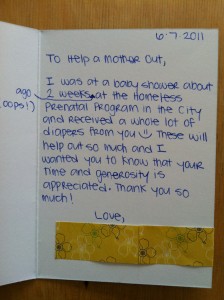
Nickel and Dimed: Barbara Ehrenreich, On Americans (Not) Getting By (Again)

I’m not sure HAMO would have been born, had I not read Nickel and Dimed when it first came out in 2001. This is a book that all should read.

Originally posted on TomDispatch.com. Reposted with permission.

It was at lunch with the editor of Harper’s Magazine that the subject came up: How does anyone actually live “on the wages available to the unskilled”?  And then Barbara Ehrenreich said something that altered her life and resulted, improbably enough, in a bestselling book with almost two million copies in print.  “Someone,” she commented, “ought to do the old-fashioned kind of journalism — you know go out there and try it for themselves.”  She meant, she hastened to point out on that book’s first page, “someone much younger than myself, some hungry neophyte journalist with time on her hands.”

That was 1998 and, somewhat to her surprise, Ehrenreich soon found herself beginning the first of a whirl of unskilled “careers” as a waitress at a “family restaurant” attached to a big discount chain hotel in Key West, Florida, at $2.43 an hour plus tips.  And the rest, of course, is history.  The now famous book that resulted, Nickel and Dimed: On (Not) Getting By in America, is just out in its tenth anniversary edition with a new afterword by Ehrenreich — perfectly timed for an American era in which the book’s subtitle might have to be changed to “On (Not) Getting a Job in America.”  TomDispatch takes special pride in offering Ehrenreich’s new afterword, adapted and shortened, for a book that, in its latest edition, deserves to sell another million copies.  Tom



Nickel and Dimed (2011 Version)
On Turning Poverty into an American Crime

By Barbara Ehrenreich

I completed the manuscript for Nickel and Dimed in a time of seemingly boundless prosperity. Technology innovators and venture capitalists were acquiring sudden fortunes, buying up McMansions like the ones I had cleaned in Maine and much larger. Even secretaries in some hi-tech firms were striking it rich with their stock options. There was loose talk about a permanent conquest of the business cycle, and a sassy new spirit infecting American capitalism. In San Francisco, a billboard for an e-trading firm proclaimed, “Make love not war,” and then — down at the bottom — “Screw it, just make money.”

When Nickel and Dimed was published in May 2001, cracks were appearing in the dot-com bubble and the stock market had begun to falter, but the book still evidently came as a surprise, even a revelation, to many. Again and again, in that first year or two after publication, people came up to me and opened with the words, “I never thought…” or “I hadn’t realized…”

To my own amazement, Nickel and Dimed quickly ascended to the bestseller list and began winning awards. Criticisms, too, have accumulated over the years. But for the most part, the book has been far better received than I could have imagined it would be, with an impact extending well into the more comfortable classes. A Florida woman wrote to tell me that, before reading it, she’d always been annoyed at the poor for what she saw as their self-inflicted obesity. Now she understood that a healthy diet wasn’t always an option.  And if I had a quarter for every person who’s told me he or she now tipped more generously, I would be able to start my own foundation.

Even more gratifying to me, the book has been widely read among low-wage workers. In the last few years, hundreds of people have written to tell me their stories: the mother of a newborn infant whose electricity had just been turned off, the woman who had just been given a diagnosis of cancer and has no health insurance, the newly homeless man who writes from a library computer.

At the time I wrote Nickel and Dimed, I wasn’t sure how many people it directly applied to — only that the official definition of poverty was way off the mark, since it defined an individual earning $7 an hour, as I did on average, as well out of poverty. But three months after the book was published, the Economic Policy Institute in Washington, D.C., issued a report entitled “Hardships in America: The Real Story of Working Families,” which found an astounding 29% of American families living in what could be more reasonably defined as poverty, meaning that they earned less than a barebones budget covering housing, child care, health care, food, transportation, and taxes — though not, it should be noted, any entertainment, meals out, cable TV, Internet service, vacations, or holiday gifts. Twenty-nine percent is a minority, but not a reassuringly small one, and other studies in the early 2000s came up with similar figures.


The big question, 10 years later, is whether things have improved or worsened for those in the bottom third of the income distribution, the people who clean hotel rooms, work in warehouses, wash dishes in restaurants, care for the very young and very old, and keep the shelves stocked in our stores. The short answer is that things have gotten much worse, especially since the economic downturn that began in 2008.

Post-Meltdown Poverty

When you read about the hardships I found people enduring while I was researching my book — the skipped meals, the lack of medical care, the occasional need to sleep in cars or vans — you should bear in mind that those occurred in thebest of times. The economy was growing, and jobs, if poorly paid, were at least plentiful.

In 2000, I had been able to walk into a number of jobs pretty much off the street. Less than a decade later, many of these jobs had disappeared and there was stiff competition for those that remained. It would have been impossible to repeat myNickel and Dimed“experiment,” had I had been so inclined, because I would probably never have found a job.

For the last couple of years, I have attempted to find out what was happening to the working poor in a declining economy — this time using conventional reporting techniques like interviewing. I started with my own extended family, which includes plenty of people without jobs or health insurance, and moved on to trying to track down a couple of the people I had met while working on Nickel and Dimed.

This wasn’t easy, because most of the addresses and phone numbers I had taken away with me had proved to be inoperative within a few months, probably due to moves and suspensions of telephone service. I had kept in touch with “Melissa” over the years, who was still working at Wal-Mart, where her wages had risen from $7 to $10 an hour, but in the meantime her husband had lost his job. “Caroline,” now in her 50s and partly disabled by diabetes and heart disease, had left her deadbeat husband and was subsisting on occasional cleaning and catering jobs. Neither seemed unduly afflicted by the recession, but only because they had already been living in what amounts to a permanent economic depression.

Media attention has focused, understandably enough, on the “nouveau poor” — formerly middle and even upper-middle class people who lost their jobs, their homes, and/or their investments in the financial crisis of 2008 and the economic downturn that followed it, but the brunt of the recession has been borne by the blue-collar working class, which had already been sliding downwards since de-industrialization began in the 1980s.

In 2008 and 2009, for example, blue-collar unemployment was increasing three times as fast as white-collar unemployment, and African American and Latino workers were three times as likely to be unemployed as white workers. Low-wage blue-collar workers, like the people I worked with in this book, were especially hard hit for the simple reason that they had so few assets and savings to fall back on as jobs disappeared.

How have the already-poor attempted to cope with their worsening economic situation? One obvious way is to cut back on health care. TheNew York Times reported in 2009 that one-third of Americans could no longer afford to comply with their prescriptions and that there had been a sizable drop in the use of medical care. Others, including members of my extended family, have given up their health insurance.

Food is another expenditure that has proved vulnerable to hard times, with the rural poor turning increasingly to “food auctions,” which offer items that may be past their sell-by dates. And for those who like their meat fresh, there’s the option of urban hunting. In Racine, Wisconsin, a 51-year-old laid-off mechanic told me he was supplementing his diet by “shooting squirrels and rabbits and eating them stewed, baked, and grilled.” In Detroit, where the wildlife population has mounted as the human population ebbs, a retired truck driver was doing a brisk business in raccoon carcasses, which he recommends marinating with vinegar and spices.

The most common coping strategy, though, is simply to increase the number of paying people per square foot of dwelling space — by doubling up or renting to couch-surfers.

It’s hard to get firm numbers on overcrowding, because no one likes to acknowledge it to census-takers, journalists, or anyone else who might be remotely connected to the authorities.

In Los Angeles, housing expert Peter Dreier says that “people who’ve lost their jobs, or at least their second jobs, cope by doubling or tripling up in overcrowded apartments, or bypaying 50 or 60 or even 70 percent of their incomes in rent.” According to a community organizer in Alexandria, Virginia, the standard apartment in a complex occupied largely by day laborers has two bedrooms, each containing an entire family of up to five people, plus an additional person laying claim to the couch.

No one could call suicide a “coping strategy,” but it is one way some people have responded to job loss and debt. There are no national statistics linking suicide to economic hard times, but the National Suicide Prevention Lifeline reported more than a four-fold increase in call volume between 2007 and 2009, and regions with particularly high unemployment, like Elkhart, Indiana, have seen troubling spikes in their suicide rates. Foreclosure is often the trigger for suicide — or, worse, murder-suicides that destroy entire families.

“Torture and Abuse of Needy Families”

We do of course have a collective way of ameliorating the hardships of individuals and families — a government safety net that is meant to save the poor from spiraling down all the way to destitution. But its response to the economic emergency of the last few years has been spotty at best. The food stamp program has responded to the crisis fairly well, to the point where it now reaches about 37 million people, up about 30% from pre-recession levels. But welfare — the traditional last resort for the down-and-out until it was “reformed” in 1996 — only expanded by about 6% in the first two years of the recession.

The difference between the two programs? There is a right to food stamps. You go to the office and, if you meet the statutory definition of need, they help you. For welfare, the street-level bureaucrats can, pretty much at their own discretion, just say no.

Take the case of Kristen and Joe Parente, Delaware residents who had always imagined that people turned to the government for help only if “they didn’t want to work.” Their troubles began well before the recession, when Joe, a fourth-generation pipe-fitter, sustained a back injury that left him unfit for even light lifting. He fell into a profound depression for several months, then rallied to ace a state-sponsored retraining course in computer repairs — only to find that those skills are no longer in demand. The obvious fallback was disability benefits, but — catch-22 — when Joe applied he was told he could not qualify without presenting a recent MRI scan. This would cost $800 to $900, which the Parentes do not have; nor has Joe, unlike the rest of the family, been able to qualify for Medicaid.

When they married as teenagers, the plan had been for Kristen to stay home with the children. But with Joe out of action and three children to support by the middle of this decade, Kristen went out and got waitressing jobs, ending up, in 2008, in a “pretty fancy place on the water.” Then the recession struck and she was laid off.

Kristen is bright, pretty, and to judge from her command of her own small kitchen, probably capable of holding down a dozen tables with precision and grace. In the past she’d always been able to land a new job within days; now there was nothing. Like 44% of laid-off people at the time, she failed to meet the fiendishly complex and sometimes arbitrary eligibility requirements for unemployment benefits. Their car started falling apart.

So the Parentes turned to what remains of welfare — TANF, or Temporary Assistance to Needy Families. TANF does not offer straightforward cash support like Aid to Families with Dependent Children, which it replaced in 1996. It’s an income supplementation program for working parents, and it was based on the sunny assumption that there would always be plenty of jobs for those enterprising enough to get them.

After Kristen applied, nothing happened for six weeks — no money, no phone calls returned. At school, the Parentes’ seven-year-old’s class was asked to write out what wish they would present to a genie, should a genie appear. Brianna’s wish was for her mother to find a job because there was nothing to eat in the house, an aspiration that her teacher deemed too disturbing to be posted on the wall with the other children’s requests.

When the Parentes finally got into “the system” and began receiving food stamps and some cash assistance, they discovered why some recipients have taken to calling TANF “Torture and Abuse of Needy Families.” From the start, the TANF experience was “humiliating,” Kristen says. The caseworkers “treat you like a bum. They act like every dollar you get is coming out of their own paychecks.”

The Parentes discovered that they were each expected to apply for 40 jobs a week, although their car was on its last legs and no money was offered for gas, tolls, or babysitting. In addition, Kristen had to drive 35 miles a day to attend “job readiness” classes offered by a private company called Arbor, which, she says, were “frankly a joke.”

Nationally, according to Kaaryn Gustafson of the University of Connecticut Law School, “applying for welfare is a lot like being booked by the police.”  There may be a mug shot, fingerprinting, and lengthy interrogations as to one’s children’s true paternity. The ostensible goal is to prevent welfare fraud, but the psychological impact is to turn poverty itself into a kind of crime.

How the Safety Net Became a Dragnet

The most shocking thing I learned from my research on the fate of the working poor in the recession was the extent to which poverty has indeed been criminalized in America.

Perhaps the constant suspicions of drug use and theft that I encountered in low-wage workplaces should have alerted me to the fact that, when you leave the relative safety of the middle class, you might as well have given up your citizenship and taken residence in a hostile nation.

Most cities, for example, have ordinances designed to drive the destitute off the streets by outlawing such necessary activities of daily life as sitting, loitering, sleeping, or lying down. Urban officials boast that there is nothing discriminatory about such laws: “If you’re lying on a sidewalk, whether you’re homeless or a millionaire, you’re in violation of the ordinance,” a St. Petersburg, Florida, city attorney stated in June 2009, echoing Anatole France’s immortal observation that “the law, in its majestic equality, forbids the rich as well as the poor to sleep under bridges…”

In defiance of all reason and compassion, the criminalization of poverty has actually intensified as the weakened economy generates ever more poverty. So concludes a recent study from the National Law Center on Poverty and Homelessness, which finds that the number of ordinances against the publicly poor has been rising since 2006, along with the harassment of the poor for more “neutral” infractions like jaywalking, littering, or carrying an open container.

The report lists America’s ten “meanest” cities — the largest of which include Los Angeles, Atlanta, and Orlando — but new contestants are springing up every day. In Colorado, Grand Junction’s city council is considering a ban on begging; Tempe, Arizona, carried out a four-day crackdown on the indigent at the end of June. And how do you know when someone is indigent? As a Las Vegas statute puts it, “an indigent person is a person whom a reasonable ordinary person would believe to be entitled to apply for or receive” public assistance.

That could be me before the blow-drying and eyeliner, and it’s definitely Al Szekeley at any time of day. A grizzled 62-year-old, he inhabits a wheelchair and is often found on G Street in Washington, D.C. — the city that is ultimately responsible for the bullet he took in the spine in Phu Bai, Vietnam, in 1972.

He had been enjoying the luxury of an indoor bed until December 2008, when the police swept through the shelter in the middle of the night looking for men with outstanding warrants. It turned out that Szekeley, who is an ordained minister and does not drink, do drugs, or cuss in front of ladies, did indeed have one — for “criminal trespassing,” as sleeping on the streets is sometimes defined by the law. So he was dragged out of the shelter and put in jail.

“Can you imagine?” asked Eric Sheptock, the homeless advocate (himself a shelter resident) who introduced me to Szekeley. “They arrested a homeless man in a shelter for being homeless?”

The viciousness of the official animus toward the indigent can be breathtaking. A few years ago, a group called Food Not Bombs started handing out free vegan food to hungry people in public parks around the nation. A number of cities, led by Las Vegas, passed ordinances forbidding the sharing of food with the indigent in public places, leading to the arrests of several middle-aged white vegans.

One anti-sharing law was just overturned in Orlando, but the war on illicit generosity continues. Orlando is appealing the decision, and Middletown, Connecticut, is in the midst of a crackdown. More recently, Gainesville, Florida, began enforcing a rule limiting the number of meals that soup kitchens may serve to 130 people in one day, and Phoenix, Arizona, has been using zoning laws to stop a local church from serving breakfast to homeless people.

For the not-yet-homeless, there are two main paths to criminalization, and one is debt. Anyone can fall into debt, and although we pride ourselves on the abolition of debtors’ prison, in at least one state, Texas, people who can’t pay fines for things like expired inspection stickers may be made to “sit out their tickets” in jail.

More commonly, the path to prison begins when one of your creditors has a court summons issued for you, which you fail to honor for one reason or another, such as that your address has changed and you never received it. Okay, now you’re in “contempt of the court.”

Or suppose you miss a payment and your car insurance lapses, and then you’re stopped for something like a broken headlight (about $130 for the bulb alone). Now, depending on the state, you may have your car impounded and/or face a steep fine — again, exposing you to a possible court summons. “There’s just no end to it once the cycle starts,” says Robert Solomon of Yale Law School. “It just keeps accelerating.”

The second — and by far the most reliable — way to be criminalized by poverty is to have the wrong color skin. Indignation runs high when a celebrity professor succumbs to racial profiling, but whole communities are effectively “profiled” for the suspicious combination of being both dark-skinned and poor. Flick a cigarette and you’re “littering”; wear the wrong color T-shirt and you’re displaying gang allegiance. Just strolling around in a dodgy neighborhood can mark you as a potential suspect. And don’t get grumpy about it or you could be “resisting arrest.”

In what has become a familiar pattern, the government defunds services that might help the poor while ramping up law enforcement.  Shut down public housing, then make it acrime to be homeless. Generate no public-sector jobs, then penalize people for falling into debt. The experience of the poor, and especially poor people of color, comes to resemblethat of a rat in a cage scrambling to avoid erratically administered electric shocks. And if you should try to escape this nightmare reality into a brief, drug-induced high, it’s “gotcha” all over again, because that of course is illegal too.

One result is our staggering level of incarceration, the highest in the world.  Today, exactly the same number of Americans — 2.3 million — reside in prison as in public housing. And what public housing remains has become ever more prison-like, with random police sweeps and, in a growing number of cities, proposed drug tests for residents. The safety net, or what remains of it, has been transformed into a dragnet.

It is not clear whether economic hard times will finally force us to break the mad cycle of poverty and punishment. With even the official level of poverty increasing — to over 14% in 2010 — some states are beginning to ease up on the criminalization of poverty, using alternative sentencing methods, shortening probation, and reducing the number of people locked up for technical violations like missing court appointments. But others, diabolically enough, are tightening the screws: not only increasing the number of “crimes,” but charging prisoners for their room and board, guaranteeing they’ll be released with potentially criminalizing levels of debt.

So what is the solution to the poverty of so many of America’s working people? Ten years ago, when Nickel and Dimed first came out, I often responded with the standard liberal wish list — a higher minimum wage, universal health care, affordable housing, good schools, reliable public transportation, and all the other things we, uniquely among the developed nations, have neglected to do.

Today, the answer seems both more modest and more challenging: if we want to reduce poverty, we have to stop doing the things that make people poor and keep them that way. Stop underpaying people for the jobs they do. Stop treating working people as potential criminals and let them have the right to organize for better wages and working conditions.

Stop the institutional harassment of those who turn to the government for help or find themselves destitute in the streets. Maybe, as so many Americans seem to believe today, we can’t afford the kinds of public programs that would genuinely alleviate poverty — though I would argue otherwise. But at least we should decide, as a bare minimum principle, to stop kicking people when they’re down.

Barbara Ehrenreich is the author of a number of books, most recently Bright-Sided: How the Relentless Promotion of Positive Thinking Has Undermined America. This essay is a shortened version of a new afterword to her bestselling book Nickel and Dimed: On (Not) Getting By in America, 10th Anniversary Edition, just released by Picador Books.

Excerpted from Nickel and Dimed: On (Not) Getting By in America, 10th Anniversary Edition, published August 2nd by Picador USA. New afterword © 2011 by Barbara Ehrenreich. Excerpted by arrangement with Metropolitan Books, an imprint of Henry Holt and Company, LLC. All rights reserved.

SoCal: #BlogHer11 Virtual Diaper Drive #hamo

This coming week some of the team will be at BlogHer ’11.

In case you haven’t heard, we’re hosting a service project to coincide with the conference, in hopes of raising much needed diaper funds we’d like to raise to benefit our Southern California families. Specifically, we have three agencies located in San Diego, Inland Empire, and east Los Angeles, who are currently on the waiting list to receive diapers.

Whether you are attending the conference or not, you can help us make a difference.

Bonus: We’re giving away an iPad, generously donated by our friends at Momversation, to one lucky online donor. And as of this writing, your chances look really good to win!

How you can help:

Spread the word about our virtual diaper drive. Official rules and more good stuff can be found via our event page.

Your online gift of $10 or more enters you to our iPad giveaway contest. Go ahead, click the BLUE button and help a mother out!

Current Needs: Newborn Care Packages #hamo

Hey, are we friends yet on Facebook? We’d be delighted for you to join our community there!

Friends,  We are currently in need of newborn care packages for both Northern and Southern California. Would your group be up for a special community service project between now and the end of the year?

Care packages are needed for our California agencies, many of whom conduct  home visits to mothers with newborns in need of essential items. Not only are the care packages useful for mother and baby, they have proven instrumental to our agencies in cultivating relationships with families in need.

Our wishlist is for 200 or more care packages for both Bay Area and Greater Los Angeles. If your group may be interested in helping us with 10 or more packages? This would be a great excuse to get together with friends and doing something impactful!

Assembled care packages ideally include:

  • Newborn diapers (1)
  • Baby wipes (1)
  • Diaper ointment (1)
  • Baby shampoo (1)
  • Baby lotion (1)

Contact: lisa (AT) helpamotherout (Dotorg)

July’s Facebook Super Friend – Meet Wendy

We interrupt our normally scheduled programming to bring you something shiny and new we are trying on. Enter, HAMO’s Facebook Super Friend.

We’ve got some super awesome supporters on Facebook and figured it’s high time to acknowledge how just how special we think you all are.

Meet Wendy of Wendolonia, our inaugural Facebook Super Friend:


1) When did you first learn about diaper need?

I first read about diaper need on the Rookie Moms blog when my friend Whitney wrote about HAMO and holding a diaper drive. My youngest was an infant at the time and had just moved up to a bigger diaper size, so I donated the rest of the smaller diapers that we had in the house along with a new pack that I picked up for donation. After I gave Whitney the diapers, I couldn’t stop thinking about how awful I’d feel if I didn’t have enough diapers for my little boy and I knew I needed to get involved. I held a diaper drive via my blog a few weeks later and I’ve been pitching in with HAMO whenever I can since then.

2) What is your favorite activity to do with your kids?

I love sitting at the kitchen table and drawing pictures with them. We all inspire each other and it’s fun to see their skills grow from month to month.

3) What is *the best* thing about being a mom?

I really love watching my kids learn things and seeing their personalities develop. There is always a new surprise around the corner.

4) What are your hobbies?

Oh man — I have a lot of hobbies! I’ll try almost any craft once or twice, but some of the things I’m currently doing include decorative bento box lunches, scrapbooking, cooking, baking, and canning. I also read a lot of magazine and play a lot of Angry Birds.

5) What’s your favorite quote?

I can’t say I really have a favorite quote, but this one from Amy Poehler struck a chord with me recently:

“I get worried for young girls sometimes; I want them to feel that they can be sassy and full and weird and geeky and smart and independent, and not so withered and shriveled.”

—Amy Poehler in an interview for Bust Magazine

Thanks Wendy for being a super hero to our cause!

Wanna be a Super Friend? It’s easy:

1) Join our Facebook friends’ page

2) Post comments and/or like stuff on our page

3) Email info (AT) helpamotherout (DOT) org with your name, website (if applicable),  photo (if you have kids, with or without them), and answers to the five questions above.  You can also nominate a Super Friend!

First Birthdays #payitforward #hamo

Are we friends? We’d love to see you over on Facebook.

I’m a little belated in posting this, but it’s so freaking cute and inspiring that I hope you all can forgive me.

During our Mother’s Day fundraising drive, an East Bay group of new moms (of which Kindercyclemom Jennifer is part of) decided they wanted to something really meaningful to honor their babies’ First Birthdays. Moms group #311 of the Support Group for Mothers had all their babies turning ONE within a few months of May. In lieu of the requisite birthday gifts for each other’s children, each of the families made a $50 gift to Help a Mother Out to honor the babies.

Their simple gesture of paying it forward, yielded a collective gift of $500! That’s a little more than half a year’s supply of diapers for one baby.

It may not seem like much to larger non profits, but for us – this gift is amazingly impactful to our work and we are super honored to have Mom’s Group #311 honor their babies and celebrate their first year of motherhood this way.

Thanks to all the Mamas of group #311 (special shout out to Annika for coordinating!).

YOU are our super heroes!

Are you inspired to act? You can make an impact too! Contact us today and let us know what you are thinking.

Image from Mom’s Group #311

Seattle: Meet Carey

I came to know Carey’s story through Change.org and Mark (@hardlynormal). Mark has embarked on his Invisible People road trip again, and recently visited Carey and her family in the Seattle area.

Through my correspondence with Carey (she’s contributed some posts here), I see a smart and very capable woman who is currently stuck in a Catch 22 (employment, affordable childcare, homelessness).

Please watch Mark’s interview with her, and if you are moved to help, please take some time to think about what it is that you can do to help this family.

Carey spends hours looking for work and submitting job applications. She wants nothing more but to work and provide for her family. Do you know have contacts in the Seattle area who might be willing to think creatively in helping Carey expand her network and obtain employment? Maybe you know of a woman-owned local business who might be willing to give Carey and informational interview. Think out of the box here.

So many people in the digital space are rooting for Carey’s family I am certain fundraising first and last months rental deposit won’t be a big issue. BUT this will do no good unless we can help Carey obtain a job that will help her provide for her family.

Think about it and let me know your (out of the box) ideas.

Help a mother out.


photo credit: We Are Visible, Mark Horvath

3 Ways You Can Help #hamo

Dear Friends Old and New,

HAMO was started a little over two years ago when we became alarmed by media reports about the number of women and children falling into poverty in the Great Recession. We learned there was a dire need for diapers and decided to invest $100 and start a Mother’s Day diaper drive. To date we’ve given out over 625K diapers and endeavor to create a safety net where none exists. We’ve also raised a lot of grassroots awareness and are working with other advocates for long term change in the social safety net.

Every week we receive requests for help from agencies like WIC, Early Head Start programs,  food pantries, and family resource centers telling us that their clients are increasingly coming to them for help with basic needs, like diapers. Sadly, many must turn away families due to lack of resources. The other day I received an email about a child who was taken away from their family in part because they had sever health problems related to the family unable to afford diapers. The fact is, the need far outweighs our current resources and there is much, much more work to be done.

Our work is in partnership with you, our AMAZING community. We reached our first big milestone goal of raising $25K this spring and looking forward to amplifying our efforts exponentially in the future.

But we can’t do it alone.

Below are THREE WAYS YOU CAN HELP this summer or later this year. No one can do everything, but if we all pitch in, we can do A LOT TOGETHER. I hope you’ll consider joining us in amplifying our efforts in putting women and children first.

How You Can Help:

1) Host a diaper drive

Hosting a diaper drive is super easy and a convenient way to help. Whether it’s corralling all your friends together to contribute in person or virtually, or making it a group effort.

2) Become a Fairy Godmother

We’re not going to be coy. Funds GREATLY help support our efforts to bring diapers to children who would otherwise go without. And as a mom-powered organization we will make your monthly contribution count to a family who is lacking in basic needs.

3) Host a fundraiser

Consider sharing the cause with your network by hosting a fundraiser. However large or small, fundraisers are incredibly helpful (not to mention fun!) to rally your network and make a lasting impact on this important work. So whether it’s charging a cover for an event you are already throwing, or hosting a gathering in your private home – your efforts will make an amazing difference with our families.

We’re excited to be creating a future in partnership with you. Thank you for putting a value on our work and for helping to create this important safety net.

Got questions? Want to help make things happen? Contact us.

p.s.  Keep in touch by joining us on Facebook!

SF: a.Muse to Benefit Help a Mother Out 6/18

a.Muse, aka Lori Shantzis, would like to invite you to join in a special evening of solo performance to benefit Help a Mother Out.

Saturday, June 18th, a.Muse will perform a 30 minute version of her autobiographical piece, “Loved by You…a Self-Love Story,” chronicling her childhood and early adulthood trying to make sense of a violent and dysfunctional household.  With humor and a bit of song and dance, the muse paints a picture of the effects of growing up in a home that was nothing like the happy and elegant family of her best friend, Laura.

Ms. Shantzis will be donating 100% of the ticket proceeds to HAMO, as a way of honoring her mother and the scores of mothers who stay with violent husbands because they have no place else to go.  While she realizes that society now has a better understanding of the needs of victims of domestic violence, she also recognizes that there is a hidden epidemic of children growing up in dangerous homes, not because their mother’s don’t want to make a change, but because there are so few options.

The evening will start with a piece by comedian and story-teller Silvio Menendez (www.silviomenendez.com).  There will be a 15 minute intermission.
Awake 7:30 pm
Loved by You…a Self-Love Story 8:15 pm

Doors open at 7 pm.

$10 (to benefit Help a Mother Out, an organization improving the lives of families in need, many of whom are homeless mothers.

Refreshments will be served.


a.Muse Gallery

614 Alabama St.

SF, CA 94110

www.yourmusegallery.com

info@yourmusegallery.com

*Loved by You:

Refusing to act her age, a 40-something woman grapples with some difficult questions about her past. She decides the best way to share her story is through burlesque, exposing more than her D cup, and a few sordid details from her crazy childhood. Will she take it all off, or just drop enough clothes and dirty laundry to leave the audience wanting more?

*Awake:

Silvio, a Spanish Interpreter at a major hospital, never knows what to expect when his beeper goes off. Called to the Operating Room, he realizes he might need something more than his knowledge of Spanish Medical terminology to face this call of duty.

The more he tries to prepare, the more he realizes how little he really knows about his own possibilities, on and off work. Will he be able to stay present and awake, or will he go back into his daily dramas?

To have a.Muse perform at your next function or to have a fundraiser at a.Muse Gallery, contact:


Lori Shantzis: 415.279.6281, lorishantzis@mac.com.

Silicon Valley: Las Madres Diaper Drive – Through July 8th

Thanks to Las Madres Neighborhood Playgroups who are hosting a diaper drive for our families starting today through July 8th. We’re super grateful to all the neighborhood captains who are organizing their playgroups in order to make a difference.

Those who live in the valley know how HOT it can get in the summer months. We’re super excited Las Madres wants to make sure more bottoms are covered, more frequently this summer.

If you are local and not familiar with Las Madres, do check them out. Not only do they have a vibrant and supportive community of families that get together often, they also do a service projects that help families in need throughout the valley.

Thanks Las Madres!

“Ten Year” Matching Opportunity #hamo

Friends,

Late today we had a generous anonymous couple offer us a end-of campaign matching opportunity. The wife, in honor of their 10 year wedding anniversary, has requested that she and her husband gift us the last $1,000 of funds we need to raise in order to get the matching grant of 100,000 Huggies diapers.

So instead of asking for diamonds or sapphires, she’s asking for the gift of diapers. Super swell, right?

Here’s the skinny:

  • If we reach $24K of our goal, our donor will match the last $1K in funds to get us to our May 31st goal of $25K.
  • As of this writing we have raised $22,330.62. That’s just $1,669.38 more to go before we reach $24K and our donor couple pitches in the last $1K to honor their “Tin Year” wedding anniversary.
  • If we are successful, we will reach our fundraising goal, and get to accept the bonus 100K diapers this summer.

Will you help us help more families? Click on the orange button to help.


In order to be eligible for this “Ten Year Anniversary” matching opportunity we need to raise THE LAST $1,669.38. We can reach our goal IF:

  • 10 kind souls to gift us $166.94 each; or
  • 20 awesome people to gift us $83.47 each; or
  • 84 swell folks to gift us $20.00 each

Help us help more moms and their babies?

Thanks so much to our donor couple who are challenging all of you to help get us to our tipping point.

P.S. If you are a new friend, please check thisthis, or this out to learn more about why we are raising both diapers and awareness. Thanks for stopping by!

It’s Really Not for the Love of Diapers

Today I came across this video via the Birth to Five Policy Alliance featuring an interview with Jack P. Shonkoff, M.D., the director for the Center on the Developing Child at Harvard University:


As Dr. Shonkoff mentions in the video, the brain is prepared to be shaped by experience. “Serve and return” experiences have a direct relation to a child’s learning capacities, behaviors, as well as physical and mental well being.

And as many a parent knows, a lot happens to the brain in the first three years of life that make it crucial for a child’s basic needs to be met. This includes an accessible supply of diapers.

It means, for example, there is less chance of diaper rash and a crying baby; and more of a chance that a caregiver will be less stressed out and may be able to concentrate on pressing family matters.There are many more reasons and you can find them here.

So it’s really not for the love of diapers that this work continues. It continues because all of you put a value on healthy children and know that they have a better chance at growing up to be healthy people when their initial “serve and return” experiences support positive cognitive and social development.

At the most basic level, this means that children must be given the chance to be kept in a clean and dry diaper. And because of many of YOU, more babies are able to have better experiences that will benefit all of us in the long term.

Tucson: Diaper Bank Beginnings

I recently had the pleasure of sitting down to talk with Hildy Gottlieb and Dimitri Petropolis, founders of the nation’s first Diaper Bank, Diaper Bank of Southern Arizona formerly known as the Community Diaper Bank of Southern Arizona. I can only attempt to capture the enthusiasm and energy that they radiated in that meeting. Dimitri and Hildy are truly inspirational and it was an honor to have so much of their time. This is the first of several blog posts based upon the meeting.

It really is quite an ordinary strip mall office in mid-town Tucson. I’ve driven past it a thousand times and not given it a second thought. However, for the past 17 years or so the ideas hatching in that office have been far from ordinary and have had an extraordinary impact not only on the Tucson community, but communities across the country.

In 1994 the office was a realty business recently purchased by Hildy and Dimitri. Wanting to get back to the work that made a difference in the community, Hildy and Dimitri added consulting with local Native American tribes in sustainable, non-gaming development to their work. Nowhere in their business plan were diapers mentioned. Their work with diapers was not planned, just a bit of holiday giving gone wildly and wonderfully astray.

A couple days before Thanksgiving one of the staff members suggested that a donation of diapers to Casa de los Ninos, a local safe haven for children, might be a nice idea for the office’s charitable holiday donation. A week or so later that simple office donation had expanded into a diaper drive and then something much bigger. Rather than the typical exchanging of goods with their local business partners and fellow realtors Hildy and Dimitri sent out a message via their holiday card,

“Don’t give us _______. Give us a diaper.”

A little bit unorthodox, a little bit silly, but their partners and fellow realtors took to it and the diapers began to roll in. What if, they thought, we were to get a radio station in on this? Perhaps we could make it bigger still. They faxed all the local radio stations. Stone cold silence from most, a snicker from one, and then a peep, morning DJ Bobby Rich, at what was then Cloud FM, now MIX FM, called to say that this sounded like a good fit with Cloud. This sort of drive-by event wasn’t common back in ’94, but Bobby and his crew set up their equipment outside this small midtown office in the wee hours of the morning so that they could do the morning show and a diaper drive. It should be noted that 3 am in Tucson in December is cold, very cold, below freezing cold, so this was no small commitment. At the end of the first broadcast Bobby said “We’re in this for the long haul.” He meant it. Seventeen years later Bobby still does the diaper drive every December.

Hildy and Dimitri, along with their staff and Bobby Rich, collected over twenty thousand diapers that first drive in 1994. As the diapers rolled in so did the stories of impact. It became clear to Hildy and Dimitri that helping with this one basic need had a positive ripple effect: A parent may have received help with housing and job training, but if they have very young children they are often unable to take advantage of their job training; they can’t afford the disposable diapers that they have to leave at the childcare facility while they work. The inability to take an offered job is a devastating loss to families who are working hard to get back on their feet. The social safety net has a big gaping hole in it and its name is diapers. Help diaper a child and help a family escape poverty.

Next time: A Diaper Bank is Born and Lessons in Compassion


Photo courtesy of Creating the Future

Xavier the X-Man Wants to Double Your Money this Mother’s Day

We’re SUPER excited to announce we have a matching gift, thanks to early supporter Xavier The X-Man!

Xavier has challenged us to raise $1000 online this Mother’s Day weekend (11:59 pm May 8th). If we can do this, he will match it with another $1000. Thanks for helping us get this matching gift!

Triple threat: Remember, if we reached our $25K goal before May 31st, Huggies will match our efforts with 100,000 diapers!

You Can Help Us in May

Updated 5/16/11: We are at $20,213.37. We just have $4,786.63 to go before the end of the month. We are nervous about making our goal.

Updated 5/9/11: We have raised $18,877.51, thanks to last minute Mother’s Day tributes and Xavier the X-Man’s weekend matching challenge. Just $6,122.49 to go before May 31st.

Updated 5/6/11: We have raised $16,344.00, thanks to online gifts and checks that came via snail mail today!

Updated 5/4/11: We have raised $13,533.39! Just $11,466.61 to go until we reach our goal!

This Mother’s Day we are issuing a public appeal for help in raising much needed funds so that we may continue to operate our diaper program.

Our goal is to raise $25K before May 31st. We are nearly half way there.

Funds raised between now and May 31st will be dedicated to building our safety net fund, addressing diaper need nationwide and in California.

Help Us Get an Extra 100,000 Diapers!

GREAT news for all of you who have already contributed! Last Thursday we were offered a diaper matching challenge from our friends at Huggies.

If we can reach our fundraising goal of $25K by May 31st, Huggies will match our efforts with 100,000 DIAPERS. AMAZING news? We have already raised $10K! Thanks in no small part to many of YOU who have already chipped in.

Will you help us reach our goal?

This is your generosity in action:

“My client’s are very thankful when they have an urgent need for diapers. I’ve had many client’s who struggles especially towards the end of the month with money, and they have a sense of peace knowing they can come to us during times of emergency.”

– Community Health Worker

“We are able to provide diapers to families who are often unable to secure the most basic of needs. The diapers help them know that at least they are able to keep their babies healthy and prevent skin problems caused by dirty diapers. It also helps empower families to feel like they are good parents because they are able to care for the most basic of needs for their children that are unmet by other services like housing and food resources.”

– Social Worker


If we can reach our goal of $25K (we are nearly half way there!), we can continue our work providing diapering supplies to families who need them. Our agency waiting list long, and you’ll really make an impact with our diaper matching challenge.

On behalf of everyone at HAMO I want wish you and yours a special Mother’s Day. Thank you for helping our families and thank you for all the invaluable ways you make a difference by choosing to help a mother out.


In community,


Lisa T., co-founder & executive director

p.s. You can also help by spreading the news about our diaper matching challenge to your friends and family: blog, email, Facebook , and tweet us (@helpamotherout #hamo). We’ll be updating our progress on this webpage and also on Facebook, so please be sure to check in on our efforts!

p.s. for media types:

Help A Mother Out (http://www.helpamotherout.org/) is dedicated to increasing access to diapers for families in need. Started by two moms with modest investment of $100, and primarily through the use of free social media tools, this one time diaper drive has quickly evolved into a nationally-recognized grassroots organization raising diapers and advocating for long term change. Our vision is a day when every baby has an adequate supply of diapers.

Thank You, Ladies Home Journal

Updated 4/21/11: A little bird told us that LHJ will be on CBS The Talk on Tuesday, April 26 talking about Mother’s Day – and they will feature HAMO in their segment! Yes, Virginia – HAMO will be mentioned for the first time on a daytime talk show! Check your local listings…

A big HUG to Ladies Home Journal for giving us a shout out in their latest issue, May, 2011. Yep, we are on page 160 (the last page!), where LHJ encourages their readers to honor Mother’s Day with acontribution to HAMO!

We’re deeply honored for the unexpected shout out, LHJ.

Thank you!

Mother’s Day for me is…..

Our guest blogger today is Carey Fuller (@Indyinnz). She’s a west coast mom, who like most of us, wants the best for her kids. Thank you Carey for sharing your thoughts on Mother’s Day.


…….one day out of the year to pay homage to the woman who made your life possible! In my honest opinion, mothers are not paid enough for all that they do since for many, being a full time parent is labor of love. But what if you happen to be a homeless single mother taking care of two kids on her own? Does the holiday suddenly mean any less? Well in my case it’s a mixed bag….

I spend the day as I normally do depending on whether or not I’m able to do a load of laundry, help with homework or preparing a meal. Finding a place to sleep for the night is a daily routine as well. Many times, Mother’s Day is a reminder of how much work I have to do. You see I’m not worried about all the things I don’t have, I’m worried about the kind of future my kids will have and what kind of impact homelessness has had on them. I also worry that my kids will see me as failing them by not being able to prevent homelessness from happening.

Mother’s Day tends to be another holiday that doesn’t apply to us. For my kids, watching other kids taking their mother out for dinner with their dad is an experience they haven’t had. The best they can do is make handmade cards which means more to me than anything that can be purchased from a Hallmark store. If the day happens to be nice, we often spend it at a local park or at the library if it’s raining.

Now you may be thinking that I’d be out spending the holiday with my own mother but for those of you who don’t know how homelessness works, once you land out here, you often lose contact with your relatives and since I have never been on really good terms with my mother, it’s not even a consideration. Once we became homeless, we pretty much became invisible not only to her but several other relatives as well.

If I were granted a Mother’s Day wish, it would be that no mother (or Father) be allowed to go without basic needs like housing which is why I advocate for the homeless. How easy it is for society to blame the parents for becoming homeless yet this same society will pay a stranger to raise their kids (foster care) or threaten to take kids away because nothing was done to prevent a parent from losing their job due to downsizing, outsourcing or because of an injury or illness. Never assume that family members will come to the rescue as I can speak from my own experience that many will not.

As far as I’m concerned, every day should be a Mother’s Day or Father’s Day for the hard working parents out there doing the best they can in an economy that has fallen apart.

I can be found at http://invisibull.wordpress.com, @Indyinnz on Twitter, Carey Fuller on Facebook, Indy on Blogher.com, or come visit us at We Are Visible and Invisible People TV also on Facebook.


Photo credit via Creative Commons 2.0: _Fidelio_